Thursday, June 7, 2012

Stand United and Know the Truth

"First they came for the socialists, and I did not speak out, for I was not a socialist. Then they came for the trade unionists, and I did not speak out, for I was not a trade unionist. Then they came for the gypsies and I did not speak out, for I was not a gypsy. Then they came for the Jews, and I did not speak out, for I was not Jewish. Then they came for me. And there was no-one left to speak out for me." - Martin Niemöller, Dachau Survivor

Thus far, we have visited Dachau and Mauthausen, both concentration camps under the Third Reich. Families were divided and taken to various camps, depending on their abilities. The elderly were some of the first to be terminated, along with women and small children. With such horrible things happening all around, why didn't communities rise up against the Nazi party in an effort to stop the extermination of innocent people? Did they know what was going on around them? The Survivors and Veterans on this trip have answered those questions for us from their perspectives. Gershon Ron, a Holocaust Survivor, said "I was lucky. Very lucky."

The mindst of the people who lived through the camps is remarkable. These camps were all throughout Eastern Europe even though we only hear about a few. Realizing how wide spread it was sends chills down your spine. Our tour guide through Mauthausen grew up around the area. She said the camps were not discussed, even 20 years after the war was over. It wasn't until later in life that she decided to research the concentration camps and discovered that she grew up very close to one. Her parents and neighbors who lived there while all this was going on, didn't speak about it, even though they knew, to an extent, the inhumane atrocities that were happening.

Our tour guide also shared a quote from a German WWII Veteran, "I spent my youth in obedience, my soldier's life in denial, my adulthood in regret and sorrow, and my old age in acceptance." That sad but real understanding can disturb any American who has never lived under Communism or experienced that kind of tyranny. In America, we are very used to freedom. This trip has given us a better appreciation of that freedom by sharing these priceless moments with such incredible men. And the responsibility that comes along with that is high.

"The only thing necessary for evil to triumph is for good men to do nothing." - Edmond Burke

This experience, if nothing else, has taught us that we can't sit back and watch as life goes on around us- we must be active participants, seeking out truth, and standing up for what we believe. As Americans, and especially as Christians, we believe that if we stand together in Christ, we can overcome all things. We begin to walk in the light of Christ, when we stand united and know the truth.

Seeing these sites and hearing the stories of people who were deeply affected first hand at these concentration camps, have given us a glimpse at what human depravity can produce.

Austin Plummer, senior
Bonnie Andersen, junior
Dr. Hall Duncan, WWII Veteran


Wednesday, June 6, 2012

I Could Have Used a Hug in 1945

György Balaesa, known to us as Dr. George Brent, has become our hero in the last seven days. Still sporting his Hungarian accent, Dr. Brent surprises us constantly with his wit and sarcasm. His quiet personality does not hold him back from speaking his mind about anything and everything--including the events he survived several decades ago.
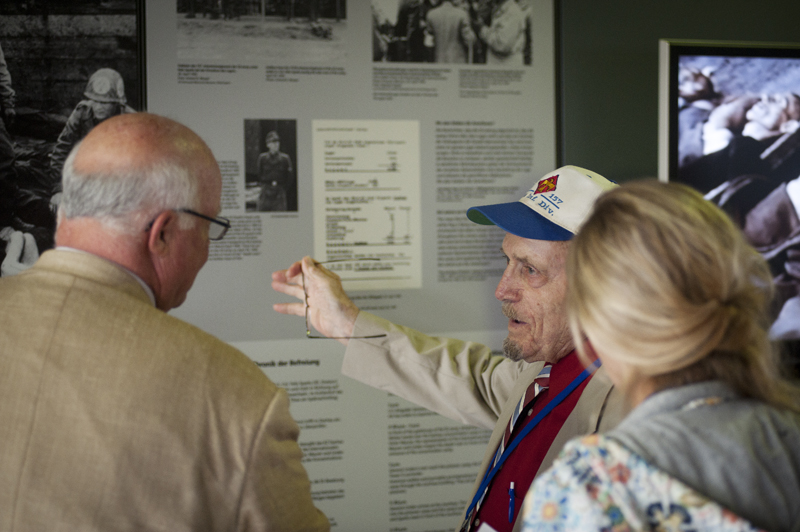
Born to a Jewish family in 1929, he was fourteen in 1944 when he and his entire family were transported by cattle car to Auschwitz-Birkenau with thousands of other Hungarian Jews. Those who were still alive were pushed, shoved, and dragged off the cars and forced into lines. An SS (Schutzstaffel) soldier stood and made the selection: left or right. He and his father were sent one direction: to life; his mother and ten year-old brother were sent the other direction: to the "showers." They were stripped of their clothes, their heads were shaved, and their freedom was taken.

At Mauthausen yesterday, the wind chill made it feel like winter. We stood shivering as we looked around us at the place that brought the deaths of so many. The three Survivors and four Veterans were honored before we entered the confines of the camp. After the short wreath-laying ceremony, the students made a line to thank these seven men. As we hugged our hero, he whispered the words, "Where were you in 1945? I could have used a hug."

As we walked arm-in-arm with Dr. Brent through both Dachau and Mauthausen, he shared stories and information that can never be properly displayed through a history book. Dr. Brent lived through the Holocaust. He survived the brutal beatings, the cruel treatment, the hunger, and the extreme cold, and he has given us the incredible gift of sharing his stories.

He arrived at Mauthausen by cattle car in January 1945, was forced to make the walk up the hill to the fortress, strip down, shower, and stand naked in the bitter cold and wind while the SS arranged the rags he would wear for the next miserable months of his life. As he told us this story, we could not fathom bearing this wind and cold in January 1945, with no clothes, no food, no strength, as he watched the last threads of hope slip away.

Dr. Brent not only survived these horrors; he thrived. He came to America in 1949, saw the Statue of Liberty, and began to learn a new language and start over in life. Because of experience in a displaced person camp in Europe following World War II, Dr. Brent served as a dental assistant during the Korean War, attaining the rank of Airman First Class. Following his service, he was given the opportunity of attending dental school at University of Illinois. He practiced dentistry until 2011, when he retired at the age of 81. He raised four beautiful daughters and has eight lovely grandchildren, of whom he shared pictures with us.

Dr. Brent has changed us. Through his openness, we have learned a new depth to the value of human life and the will to survive against all odds. He, along with the other six men, have appointed us with the terrific duty and honor of sharing their stories with the generations to come. It is a heavy weight to bear, but it is an incredible blessing to carry these stories on.

Michael Dickinson, junior
Sabrina Elliot, junior
Emma Martin, senior


Tuesday, June 5, 2012

A Vow Never to Forget


Overwhelmed by history, our experience with Mr. Gershon Ron, Holocaust Survivor, personalizes the events that took place during a time of great hardship. Gershon was born a Jewish child in Czechoslovakia. At the age of 13, his father, a member of the Hungarian Army, was the first to be taken from his family. As a slave, he worked in a camp digging trenches. Following his father's arrest, his mother, younger brother and Gershon were taken to Birkenau where his nightmare began. Separated from his family on the day of their first selection, Gershon watched as his brother marched toward the gas chambers, meeting death. The whereabouts of his mother were unknown until he encountered a female friend who had been with her a few weeks following the separation. He waited at the fence for confirmation, but the SS (Schutzstaffel) chased him away before they met. After American liberation, Gershon believed he was alone. His fears were relieved when he was reunited with his mother. A joyous reunion indeed.

All expectations were exceeded by the prison walls that resembled a fortress of the Mauthausen concentration camp. Gershon mentioned an uneasy stomach as we approached the camp. The experience was intensified from a mood set by a dreary, cold forecast. As we entered the camp, we approached three plaques dedicated to the 11th Armored Division, 65th Infantry Division and the 26th Infantry Division (Yankee Division). To honor the Survivors and Veterans, a ceremonial wreath was placed at their feet as they were lined up below the plaques. Later, Gershon shared his feelings with us. "I wasn't expecting that to be so emotional, but the memories of the camp flooded back as we stood at the wall," said Gershon. "I felt like we were being lined up to be shot but in reality we were being honored. I felt such relief when you 'kids' came to hug me." That comment alone made the trip worth is as we were able to be a comfort in his time of need.

After the ceremony, Gershon rushed ahead to see the Wailing Wall, a place where inmates were stripped of their clothing and were forced to stand facing the wall in the freezing weather of January until the SS decided they could leave. Following the visit to the Wailing Wall, we visited one of the renovated barracks that were used to house close to 300 inmates in a single room.The room felt claustrophobic after this realization.

Next, we went to the gas chambers. Plaques on every wall described the atrocious actions that took place. We stood in the room where Nazis would degrade inmates after death further by throwing their bodies in the crematorium to remove all evidence. There was also a dissection room for removal of gold teeth, the tattooed skin of inmates and other experiments. The atmosphere was indescribable.

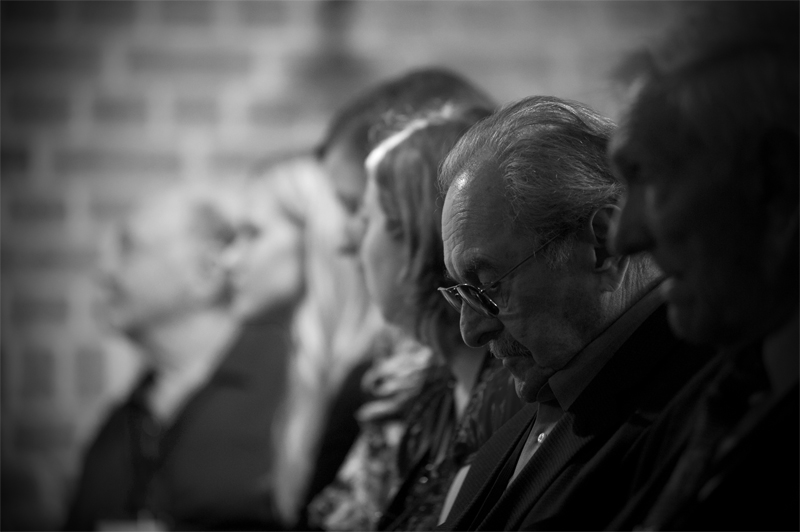
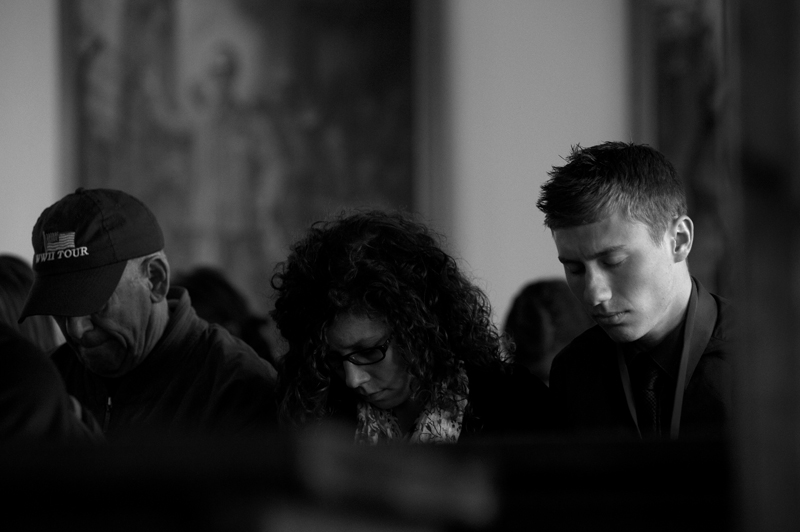
We then visited a chapel within the concentration camp where we meditated on the trials that occurred in this evil place. Mr. George Spooner, a Holocaust Survivor, recited Psalm 23 to the group and a prayer was said in remembrance of the lives lost. Even though the experience was hard, this was one of the highlights of our day as we had the opportunity to pray with Gershon. Everyone had the opportunity to sit in the presence of God and praise Him for being a merciful and gracious Father.

After having lunch in the town of Mauthausen, we traveled to the "Stairs of Death" located near the camp. The stairs consisted of 186 steps that inmates were forced to climb while carrying heavy granite boulders. The treacherous climb usually ended with death as the SS officers would force the prisoners to jump off the cliff. They called it Jewish Paratrooper Training as a cynical joke. At the top of the cliff stood numerous monuments from each country in remembrance of the people who lost their lives at Mauthausen. At the top of the cliff, a group of 6 students prayed over the impact of the camp and made a vow never to forget the responsibility to pass on the knowledge gained during this trip. We have stood where Hitler has stood, where fear and torture was used as a weapon, where tears were shed, where innocents lost their freedom and where millions were massacred. We are truly grateful for this time with Gershon and will take this experience with us throughout the rest of our lives. He says we are his adopted grandchildren and we plan on maintaining that relationship for a long time to come.


Ashley Bench, junior
Trey Owens, junior

Mauthausen

As we entered Mauthausen, we had a short ceremony to honor our Veterans and Survivors along with all Liberators, Survivors and those fallen.


A Survivors Discussion - Part 2

Holocaust Survivors (Dr. George Brent, Mr. George Spooner and Mr. Gershon Ron) discuss history and events surrounding the rise of the Nazi party and the effect it had on their lives.


Monday, June 4, 2012

An Experience Shared


Our day at Dachau was unforgettable. We spent the morning walking through the museum, closely following our Veteran, Mr. Chan Rogers, as he soaked in each display. After our extensive tour of the camp, we visited a convent where Mr. Rogers had the opportunity to share his incredible story to the group.
Throughout our time in Munich, Mr. Rogers has been eager to share about his experiences in WWII. He spent a good deal of time stationed in Munich and is not shy about bestowing his knowledge on us at every opportunity. Mr. Rogers was a sergeant in the 45th Infantry Division and took part in the liberation of Dachau on April 29, 1945. However, even though Mr. Rogers is full of stories filled with details that many do not know, the one thing that is still difficult for him to talk about is the atrocities he saw upon his arrival at Dachau.

Mr. Rogers explained that when he first heard the words, “concentration camp,” he was told it was a place the Nazis kept prisoners who did not agree with their views. However, what he discovered was far more than that simple explanation. Mr. Rogers' platoon came upon several Dutch prisoners who had escaped Dachau and were hiding out in the abandoned quarters of the SS. They could not understand each others language, but he did know that they were enemies of the Nazis and therefore friends to him. From there his group was able to locate the camp and begin the liberation process. When asked about his feelings of the horror he saw in Dachau, Mr. Rogers replied that he gets too emotional and could not answer the question. He simply said that he did not understand how such defenseless people could be treated so cruelly.

Each of us are descendants of liberators from Dachau and it was an honor to be in the same place that our family members once stood. Especially with a man who witnessed it firsthand. We never got to hear the stories of the liberation from our own relatives, so to hear it from a man who actually walked the grounds of Dachau in 1945 is an experience that will live on with each of us for the rest of our lives.

Mr. Rogers has been an incredible teacher these past few days. His ability to remember such small details is astounding. He has said many times that his purpose in coming on this trip is to impart as much information as he can to the students and other participants on the trip. Mr. Rogers is particularly passionate about his career after the war as a civil engineer.

After our visit to Dachau, the group traveled to Berchtesgaden to see Hitler's infamous Eagle's Nest. Mr. Rogers was truly fascinated to see all the development that had to be done in the building process of Eagle's Nest and was surprised that it was the highlight of his trip. Even though Mr. Rogers is a civil engineer, to us, he has become our most passionate teacher.

Sarah Unruh, junior
Grace Helms, senior
April Van Haitsma, senior

Lunch in the Clouds

As we travel from Munich, Germany to Linz, Austria, we stopped in the Alps to explore the underground tunnels, to ride the brass elevator, eat lunch, and to take in the stunning scenery at Hitler's Eagle's Nest.